Estate Planning & Administration
Funding a Trust: Deeds & Retitling
Last updated August 2026
6 min read
✓ Verified Aug. 2026The most common estate planning failure is not a badly drafted document; it is a perfectly drafted trust that was never funded. An unfunded trust is a legal fiction. It does not avoid probate, does not protect assets, and does not accomplish any of the goals it was meant to achieve. The assets remain in the settlor ’s individual name and pass through the estate just as if the trust did not exist.
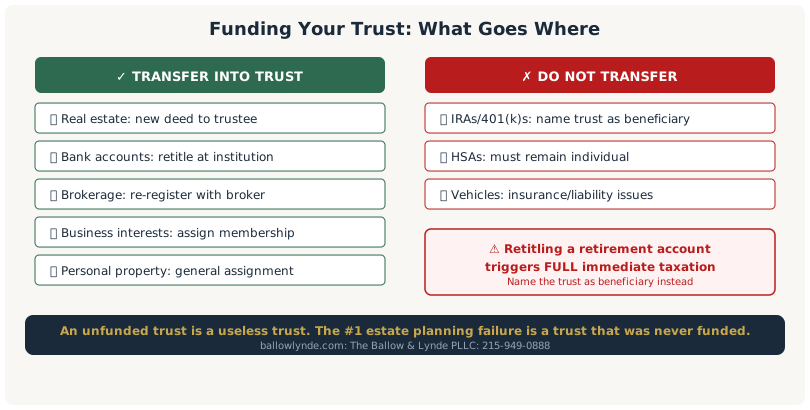
Funding a trust means transferring ownership of your assets from your individual name (or joint names) into the name of the trust. Each type of asset requires a different transfer mechanism:
This is where most Pennsylvania-specific issues arise. To transfer real property to your trust, you execute a new deed conveying the property from yourself individually to yourself as trustee of the trust.
Realty transfer tax: Transfers to a revocable living trust are exempt from Pennsylvania’s realty transfer tax under 72 P.S. § 8102-C.3; but only if the transfer is to a trust where the settlor is the beneficiary during the settlor’s lifetime. The exemption also applies to transfers from the trust back to the settlor and to transfers upon the settlor’s death to designated beneficiaries of the trust. The transfer tax statement of value form must still be filed, claiming the exemption, and the recorder of deeds must be presented with a copy of the living trust instrument for the exemption to be granted.
Recording : The deed must be recorded at the Bucks County Recorder of Deeds with a Statement of Value form, Certification of Residence, and applicable recording fees.
Title insurance : Transferring property to your own trust generally does not void your existing title insurance policy, but you should notify your title insurer. Some policies require formal endorsement.
Mortgage considerations: Most residential mortgages contain a “due on sale” clause. Federal law (the Garn-St. Germain Act, 12 U.S.C. § 1701j-3) prevents lenders from accelerating a mortgage when the borrower transfers the property to a trust in which the borrower remains a beneficiary. However, you should still notify your lender, and the borrower should remain personally liable on the note.
Each financial institution has its own process, but you will need to provide a certification of trust (20 Pa.C.S. § 7790.3) rather than the full trust document. The certification confirms the trust exists, identifies the trustees, and states their powers. Pennsylvania law protects institutions that rely on a certification in good faith.
Pour-Over Wills
A pour-over will is a safety net: it directs any assets that were not transferred to the trust during life to “pour over” into the trust at death. But those assets still go through probate first; the pour-over will does not avoid probate, it just ensures everything eventually ends up in the trust for distribution. It is a backup, not a substitute for proper funding.
Legal and factual content on this page was last verified: Aug. 2026. If you are reading this significantly after that date, confirm key provisions with current statute text or contact our office.
Complete estate plans at published flat fees: $950 for an individual, $1,500 for a couple. The consultation is free.
Book a Free Consultation Or call 215-949-0888